Automate a DOCX with Node.js
Query a DOCX, accept its tracked changes, and save the result from Node.js.
Use the SDK when application code knows the operation it needs. No model is involved: the script queries, mutates, and saves deterministically.
1. Install the Node.js SDK
pnpm add @superdoc/sdk@latestThe SDK embeds the SuperDoc runtime. You do not need a separate CLI installation to use SuperDocClient.
2. Prepare a document
Download the tracked-changes fixture. Save it as contract.docx in your working directory. It contains the word termination and one tracked change. Any document meeting those two conditions also works.
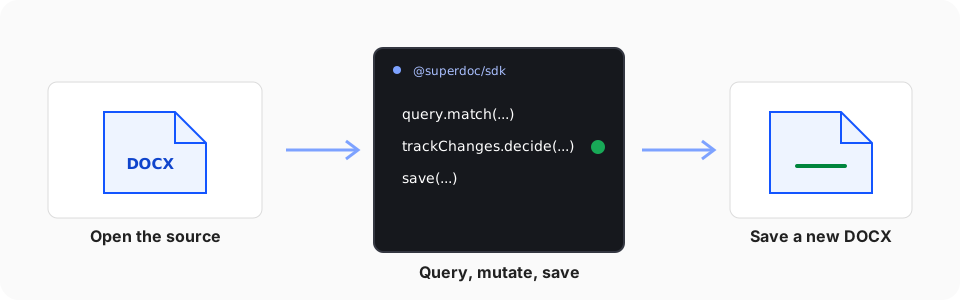
3. Query, mutate, and save
Create accept-changes.mjs:
import { SuperDocClient } from '@superdoc/sdk';

/** @param {unknown} value */
function isSuccessfulReceipt(value) {
  return typeof value === 'object' && value !== null && 'success' in value && value.success === true;
}

const client = new SuperDocClient();

try {
  await client.connect();
  const doc = await client.open({ doc: './contract.docx' });

  try {
    const match = await doc.query.match({
      select: { type: 'text', pattern: 'termination' },
      require: 'first',
    });

    console.log('Matched:', match.items[0]);

    const receipt = await doc.trackChanges.decide({
      decision: 'accept',
      target: { kind: 'all' },
    });

    console.log('Mutation receipt:', receipt);
    if (!isSuccessfulReceipt(receipt)) throw new Error('Accepting tracked changes failed.');

    await doc.save({
      out: './contract.accepted.docx',
      force: true,
    });
  } finally {
    await doc.close({ discard: true });
  }
} finally {
  await client.dispose();
}
Run it with Node.js:
node accept-changes.mjs4. Verify the output
Open contract.accepted.docx in Word or the SuperDoc editor. The tracked changes should be accepted. The original contract.docx remains unchanged.
Saving to a separate path leaves the source session dirty by design. After the output succeeds, close({ discard: true }) closes that in-memory session without overwriting the source file.
For the contract behind each step, read the Document API mental model.
Open a token-authenticated collaboration document
Pass a Hocuspocus or y-websocket token in the options for that document's open request:
const document = await client.open(
  {
    doc: './contract.docx',
    collaboration: {
      providerType: 'hocuspocus',
      url: 'wss://collaboration.example.com',
      documentId: 'contract-123',
    },
  },
  { collaborationAuth: { type: 'token', token: userToken } },
);
The credential is separate from the collaboration profile and command-line arguments. It applies to the provider created for this open request. Per-open token authentication is not supported for Liveblocks or the standalone document host.
Prefer Python? Follow the Python SDK guide for the same deterministic workflow.